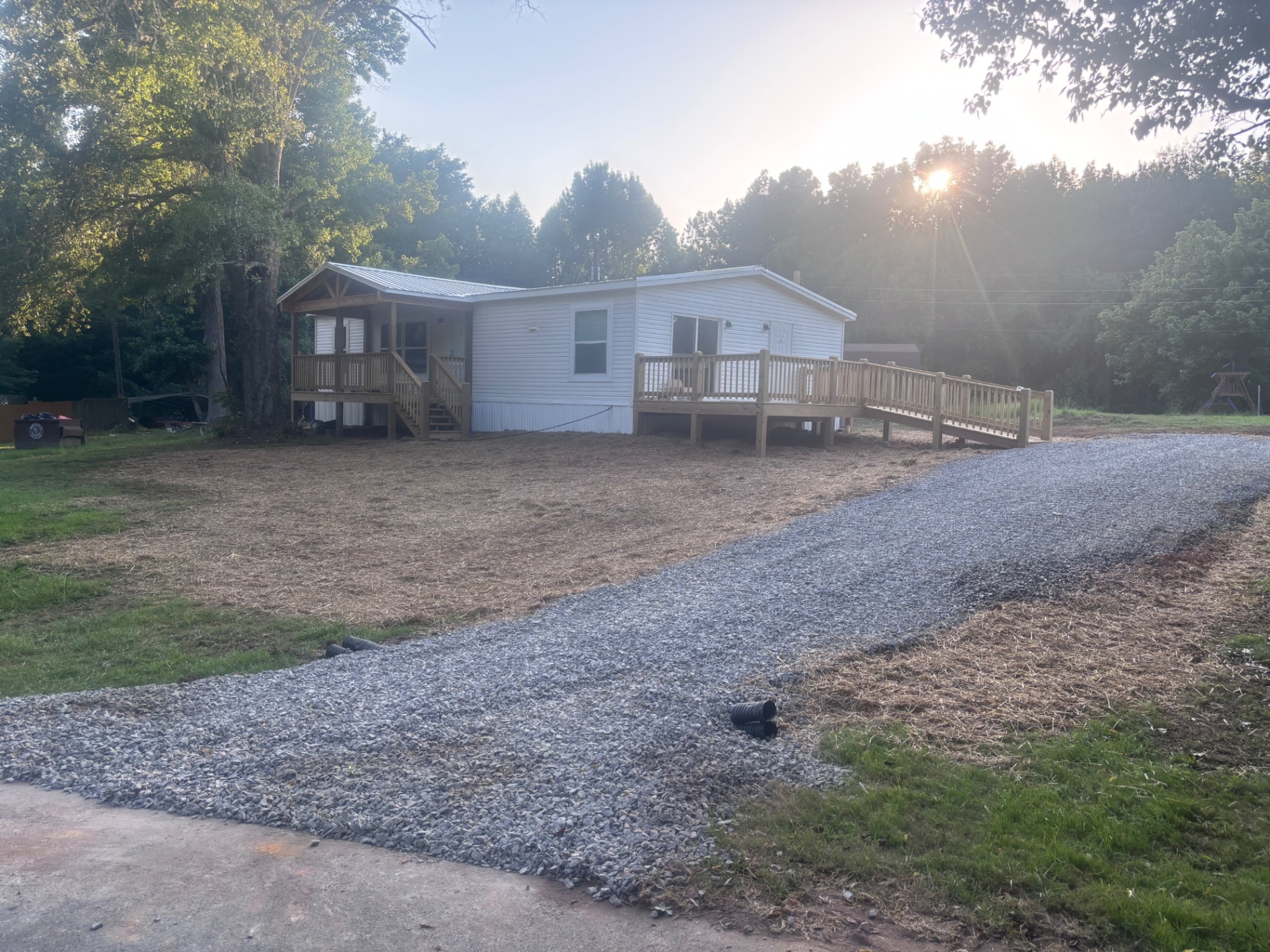
Why Alabama gravel driveways fail — and how we prevent it
Gravel driveways in the Birmingham metro fail for the same three reasons: water, weak base, and the wrong stone. Alabama gets 55+ inches of rain a year, and if a driveway is flat or drains toward the house, every storm moves stone downhill and leaves ruts. Red clay underneath turns slick when wet, so a thin layer of gravel on native soil just sinks and disappears.
We fix that by cutting a proper crown into the driveway — typically a 2–3 inch rise in the center so water sheds to both sides — and building a compacted base course before the top stone ever goes down. On long rural drives we add ditches and cross-culverts at low spots so water crosses under the driveway instead of running down it. The result is a drive that stays drivable through spring rains and doesn't need new stone every year.